
How Acupuncture Supports Fertility
1. Regulates Hormones
Acupuncture can influence the hypothalamic-pituitary-ovarian (HPO) axis, which controls hormonal balance. This helps regulate menstrual cycles, ovulation, and progesterone levels—crucial for conception and implantation.
“Think of acupuncture as the body’s hormone harmonizer. It helps get your cycle back in rhythm so your body is more receptive to pregnancy.”

Illustration about acupuncture and fertility, including menstrual cycle, ovulation, and hormonal health.
2. Improves Blood Flow to the Uterus and Ovaries
By promoting circulation, acupuncture enhances the uterine lining and improves ovarian function, creating a more favorable environment for implantation.
“Acupuncture helps bring nourishing blood flow to your reproductive organs—like giving your uterus a fresh, fertile garden bed.”
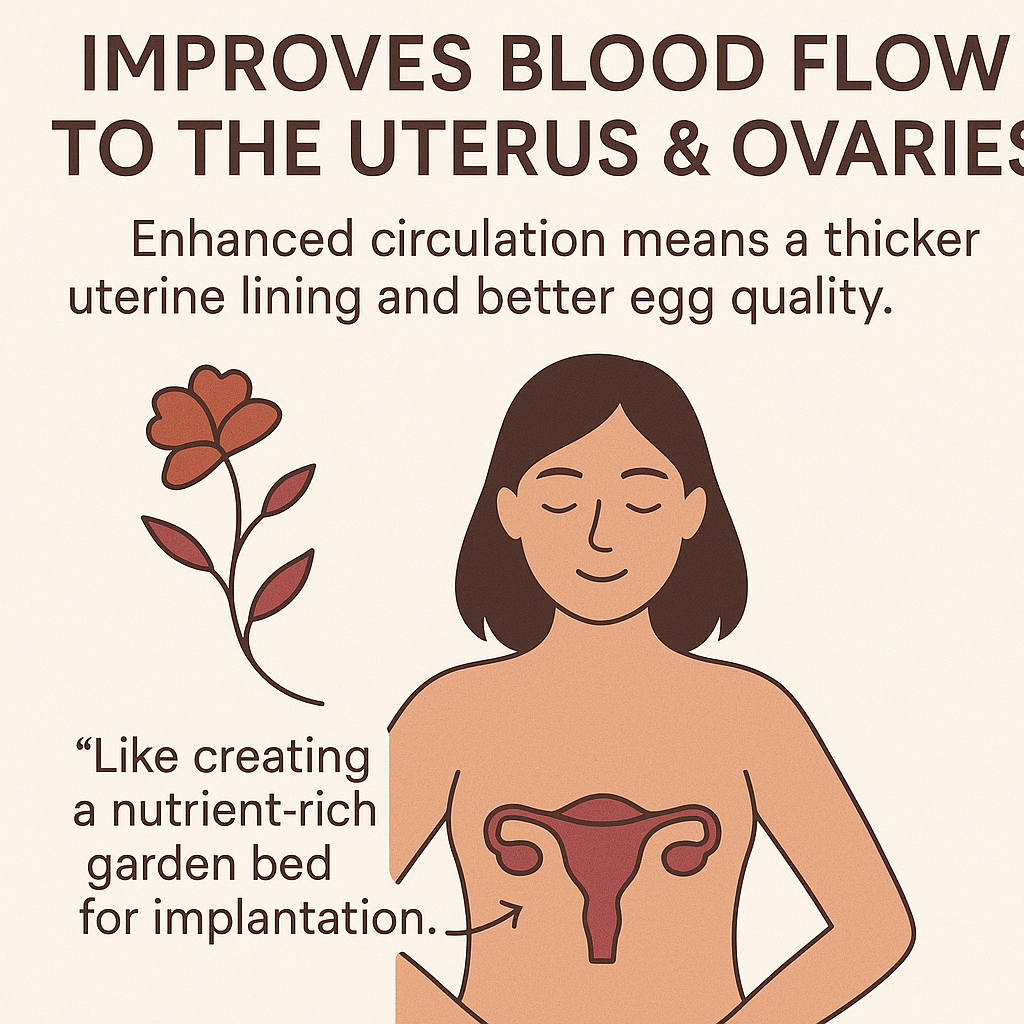
Illustration about acupuncture, fertility, and circulation to the uterus and ovaries.
3. Reduces Stress and Cortisol Levels
Chronic stress can interfere with fertility hormones. Acupuncture has been shown to calm the nervous system and lower cortisol, helping the body enter a more receptive state for conception.
“When you’re relaxed, your body feels safe enough to prioritize reproduction. Acupuncture helps shift you from ‘fight or flight’ to ’rest and reproduce.’”

Illustration about acupuncture, fertility support, stress management, and emotional well-being.
4. Supports IVF and Other ART (Assisted Reproductive Technologies)
What does the research say about acupuncture and IVF?
Acupuncture and IVF Support
Acupuncture is commonly used as a complementary therapy alongside IVF and other assisted reproductive technologies. Research has examined whether acupuncture may influence IVF outcomes, and several systematic reviews and meta-analyses have reported higher clinical pregnancy rates—and in some analyses, higher live-birth rates—among women receiving acupuncture.
However, results across studies have been mixed, and differences in acupuncture protocols, timing, control groups, and study quality make it difficult to draw firm conclusions. Acupuncture should therefore be viewed as complementary care rather than a treatment that can guarantee or independently determine IVF success.
Educational graphic about acupuncture as complementary care alongside IVF and other assisted reproductive technologies (ART).
5. Helps with Unexplained Infertility
For people who have no clear medical cause for infertility, acupuncture can uncover and address imbalances from a holistic perspective—such as liver stagnation, blood deficiency, or kidney energy weakness (in TCM terms).
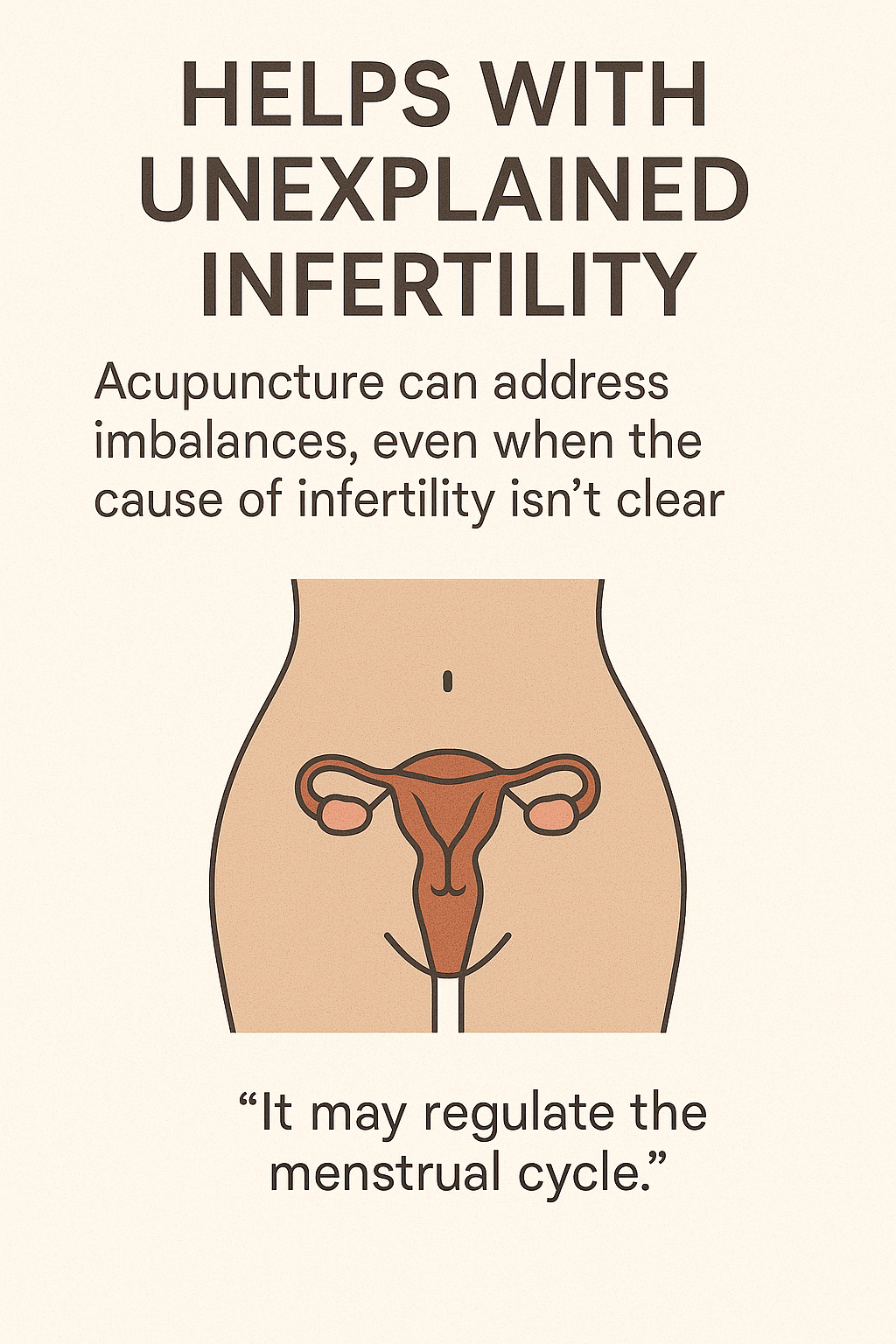
Educational illustration about acupuncture, unexplained fertility, and menstrual cycle support.

Educational graphic about research on acupuncture as complementary care during IVF and fertility treatment.
“Sometimes the answers aren’t on the lab report. Acupuncture looks at the whole picture and supports the body where it’s been overlooked.”
Acupuncture is a powerful complement to fertility treatments by addressing both physical and emotional aspects of reproductive health.
Pregnant woman featured in an educational video about acupuncture as complementary support during IVF and other assisted reproductive technologies.
